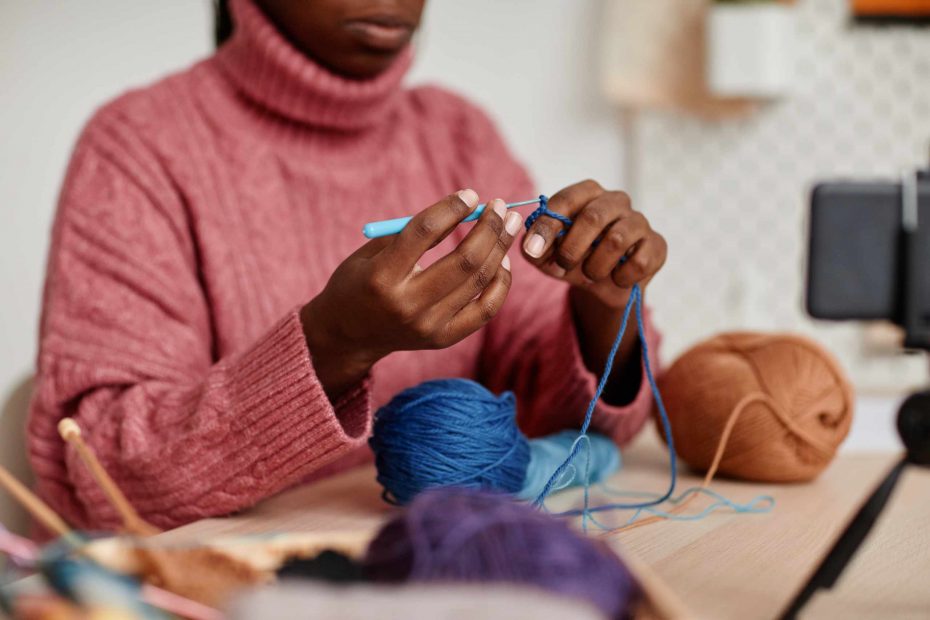
A ball of yarn can look friendly on the shelf and still be difficult on the needles. For first knitting practice, the prettiest texture is not always the easiest one to learn with. Fuzzy yarn can hide the shape of each loop. Slippery yarn can slide off the needle before your hands know what to do. Very dark yarn can make it hard to see where one stitch ends and the next begins. The goal is not to choose the most impressive yarn, but the yarn that lets you see and feel your stitches clearly.
For early swatches, smooth medium-weight yarn is usually easier to handle than very thin, bulky, fluffy, or uneven yarn. Medium-weight yarn gives your fingers enough material to hold without forcing you to fight large loops. Smooth fiber texture also makes the knit stitch and purl stitch easier to recognize. When the yarn surface is clear, you can see whether the right leg of the stitch is sitting on the needle, whether the working yarn is in the correct place, and whether the row is becoming too tight.
Color matters more than many new knitters expect. Light-colored practice yarn makes the rows easier to inspect, especially when you are counting stitches or looking for a dropped stitch. Black, navy, deep brown, and heavily variegated yarns can be beautiful later, but they often make the first lessons harder because shadows and color changes hide the loop structure. A plain light gray, cream, soft blue, or pale green yarn can make small mistakes visible before they spread down the fabric.
Needle size should match the yarn well enough that the stitches can move without sticking or sagging. If the needles are too small for the yarn, each stitch may feel squeezed, and the first row after casting on can become frustrating. If the needles are too large, the loops may look loose and uneven, making tension harder to judge. The yarn label usually suggests a needle size range, and staying near that range is a practical starting point. You do not need to understand gauge deeply on the first day, but you do need a setup that lets each stitch slide with reasonable control.
Before starting a scarf or small item, make a sample square with the yarn you chose. Cast on a modest number of stitches and knit several short rows. Pause after every few rows and look at the fabric instead of only counting how many rows you completed. Are the stitches easy to see? Can you insert the needle without forcing it? Do the loops stay on the needle without slipping away too quickly? This small test tells you more than the yarn label alone.
One useful comparison is to knit two small swatches with different yarns. Use the same needles if both yarns fit them well, then notice what changes. One yarn may make your tension look steadier. Another may make the edge stitches harder to control. You may find that a smooth medium-weight yarn helps you spot extra stitches at the row edge sooner, while a fuzzy yarn hides them until the shape has already changed. This is not about judging the yarn as good or bad; it is about choosing the material that supports your current practice.
Keep your first yarn choice simple enough that your attention can stay on the basic movements: holding the needles, wrapping the working yarn, moving each stitch across, and checking the row count. Later, textured, dark, slippery, or delicate yarns can become interesting materials to explore. At the beginning, a clear yarn is like a clear page. It lets you read the stitches, notice tension, and understand what your hands are doing one loop at a time.