ABOUT
KNITBLOOM PRACTICE
A calm way to begin knitting with yarn, needles, visible stitches, and small row-by-row practice.
OUR APPROACH
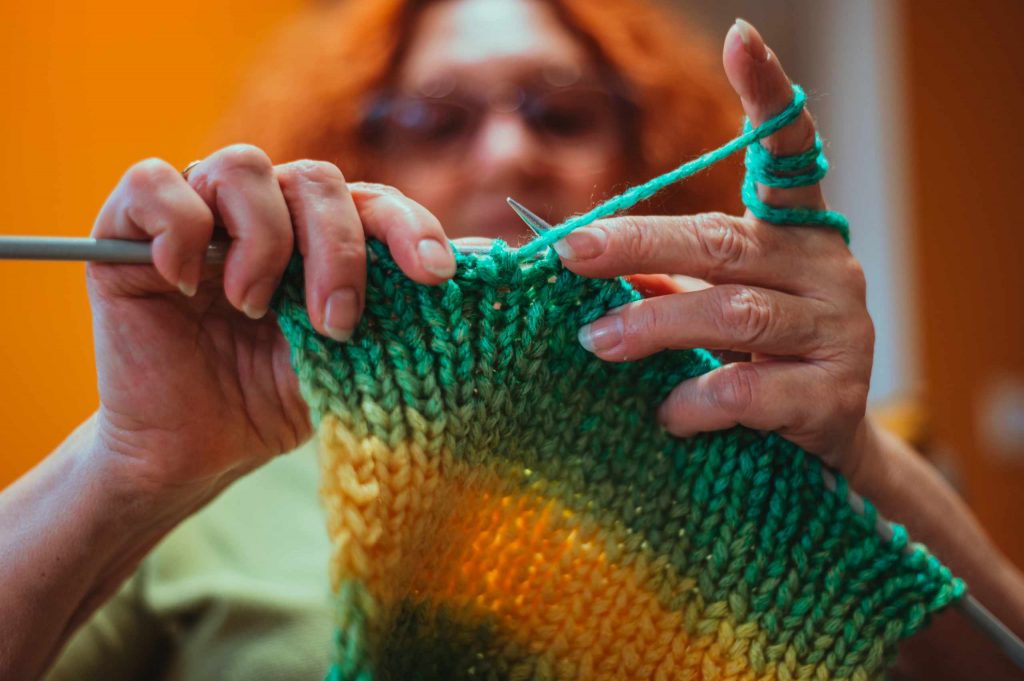
KnitBloom keeps early knitting practice small enough to inspect. Instead of rushing into a large scarf or garment, learners work with smooth yarn, comfortable needle sizes, short rows, and sample swatches so tension, stitch shape, edge stitches, and row counts can be noticed before mistakes spread.
HOW PRACTICE BUILDS
START WITH TOOLS
The first steps focus on holding needles, placing the working yarn, choosing visible practice yarn, and understanding how needle size changes the feel of each loop.
MOTION PRACTICE
Knit and purl movements are practiced slowly through short rows, with attention to needle entry, yarn wrap, stitch transfer, and how tight or loose the fabric becomes.
CHECK THE ROWS
Learners use row counts, stitch counts, markers, and edge checks to catch dropped stitches, added stitches, tight cast-ons, and uneven loops while the piece is still easy to correct.
OUR METHOD
SMALL SWATCHES FIRST
Practice samples make knitting easier to understand. A swatch gives enough space to repeat stitches, compare tension, test garter stitch or ribbing, and notice what changed between one row and the next.
MATERIALS MATTER
Early results depend on more than effort. Smooth medium-weight yarn, light colors, suitable needles, and simple tools like stitch markers or a row counter help each loop stay visible.
MISTAKES ARE READABLE
Dropped stitches, uneven edges, and mixed-up knit-purl rows are treated as signals to inspect the fabric, not as reasons to restart everything without understanding what happened.
FINISHING IS INCLUDED
A small piece feels more complete when the final edge is not squeezed, yarn tails are trimmed neatly, and weaving in ends is practiced as part of the same learning process.
READY TO PLAN YOUR FIRST SWATCH?
Ask about yarn, needles, practice pace, or where to begin if you have never cast on before. A clear first setup makes the early rows easier to follow.